


Garam Masala vs Chicken Masala vs Chaat Masala: Which One Do You Actually Need?
Darling MasalaDarling Masala formulates each of its blends around a specific culinary role rather than as generic "all-purpose" seasoning, which gives us direct insight into how these three commonly confused masalas actually differ.
- Garam masala is a finishing spice, added at the end of cooking.
- Chicken masala is a primary seasoning built specifically around poultry.
- Chaat masala is never cooked; it's sprinkled on after the food is ready.
- Most well-stocked kitchens eventually need all three, since they don't overlap in function.
Introduction
Standing in front of a spice shelf with three similarly labelled packets, garam masala, chicken masala, and chaat masala, it's easy to assume they're roughly interchangeable, just different versions of the same general idea. They're not, and using the wrong one in the wrong place can genuinely throw off an entire dish, no matter how good the individual masala actually is. Each of these three blends is built for a very specific role in cooking, one added at the end for warmth, one used throughout cooking for a specific protein, and one sprinkled on only after the food is ready. This guide breaks down exactly what separates the three, so the next time you reach for a jar, you know precisely which one your recipe actually needs.
Garam Masala vs Chicken Masala vs Chaat Masala: Which One Do You Actually Need?
Garam Masala: The Warming Finisher
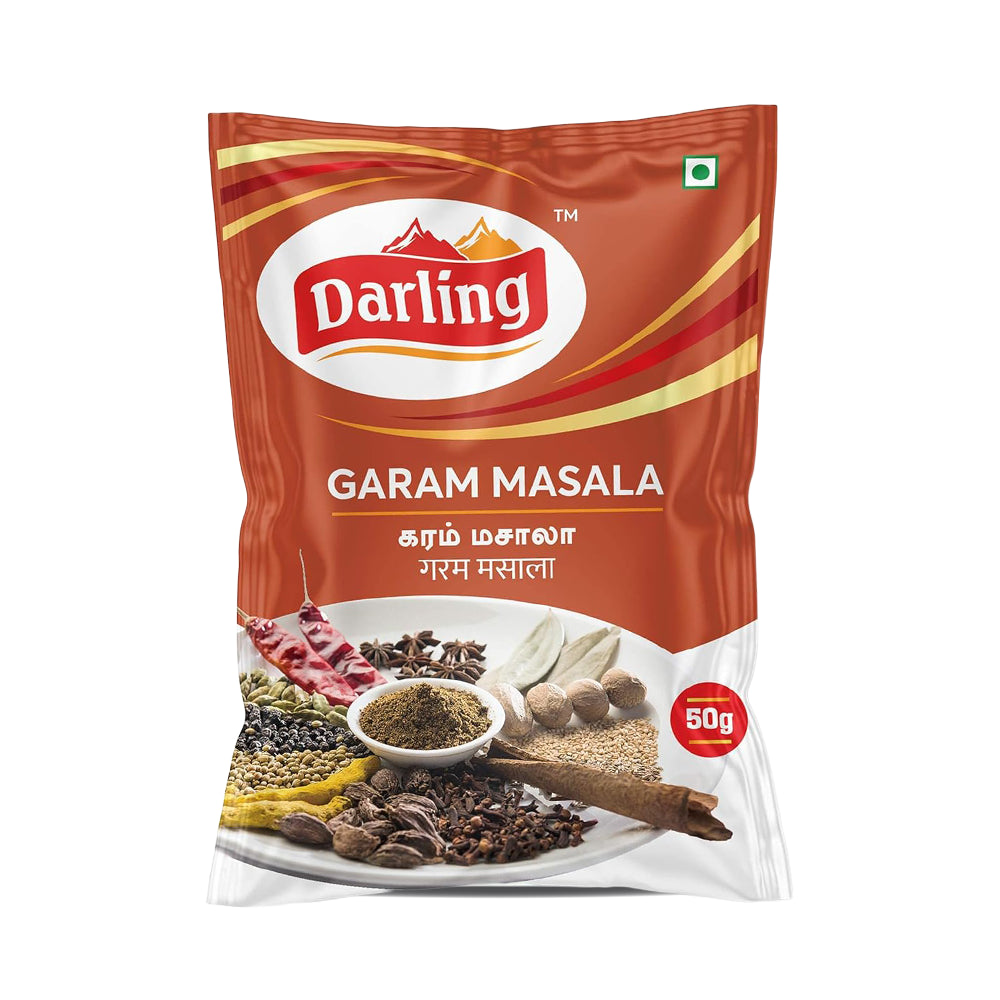
A blend of warming whole spices, cinnamon, cloves, cardamom, black pepper, ground together. Typically sprinkled in toward the end of cooking, adding aroma and warmth.
Best used in: North Indian curries, dal, kheema, vegetable dishes. Not ideal for: Dishes that need bold heat or tang as the primary flavour.
Chicken Masala: Built for a Specific Protein
Formulated specifically to complement poultry, with a bolder chilli and coriander base. Meant to be used as a primary seasoning throughout cooking.
Best used in: Chicken curries, chicken fry, marinades. Not ideal for: Vegetarian dishes or other proteins like mutton or fish.
Did You Know?
Chaat masala's distinctive tang comes largely from amchur, dried unripe mango powder, which was traditionally used across Indian cooking as a souring agent long before lemon and vinegar became common substitutes.
Chaat Masala: The Tangy Finishing Touch
Built around dried mango powder, black salt, and cumin. Meant to be sprinkled directly onto food right before eating, never cooked into a dish.
Best used in: Fruit chaats, salads, sandwiches, roasted snacks. Not ideal for: Cooking into gravies or curries.
Side-by-Side Comparison
|
Aspect |
Garam Masala |
Chicken Masala |
Chaat Masala |
|
Flavour profile |
Warm, aromatic |
Bold, savoury |
Tangy, salty |
|
When added |
End of cooking |
Throughout cooking |
After cooking, uncooked |
|
Best paired with |
Curries, dal, kheema |
Chicken specifically |
Snacks, fruits, salads |
|
Cooked or raw use |
Cooked |
Cooked |
Raw |
Three Blends, Each Formulated for Its Own Purpose
Darling Masala doesn't build one generic masala and relabel it three times, our garam masala, chicken masala, and chaat masala are each formulated separately for the specific role they play in a meal. Everyone goes through the same handpicked sourcing and precision grinding process, but the spice ratios are adjusted to suit their purpose, warmth for garam masala, boldness for chicken masala, and tang for chaat masala. That distinction is what lets each one perform properly rather than acting as a rough substitute for the other. We treat that specificity as a matter of quality, not just labelling. See the full range at the website.
Conclusion
The confusion between these three usually comes down to assuming "masala" means one general category of spice. In reality, garam masala, chicken masala, and chaat masala are built for entirely different moments in a meal. Once that distinction is clear, choosing the right one becomes second nature.
FAQs
1. Can chicken masala be used instead of garam masala in a vegetarian curry?
It's not ideal, since chicken masala is formulated specifically around poultry's flavour profile.
2. Is chaat masala ever used in cooking rather than as a finishing sprinkle?
Rarely. Its tangy, raw flavour is designed to be added after cooking.
3. What's the main spice that gives chaat masala its distinct tang?
Dried mango powder, known as amchur, along with black salt.
4. When during cooking should garam masala be added?
Toward the end of cooking, just before switching off the flame.
5. Can garam masala be used in chicken dishes instead of chicken masala?
Yes, though the flavour will be more generally warming rather than specifically tailored to chicken.
6. Is chaat masala only used with fruits?
No, it's also commonly sprinkled over roasted snacks, sandwiches, salads, and beverages.
7. Which of the three is the most versatile for a small kitchen?
Garam masala, since it works across a wide range of both vegetarian and non-vegetarian dishes as a finishing spice.
8. Can garam masala and chaat masala be mixed together in one dish?
It's not common, since they serve very different purposes; one is a cooked, warming spice and the other a raw, tangy finisher, and combining them can confuse a dish's flavour profile.
9. Does chicken masala work for other meats like mutton or fish?
It can be used in a pinch, but dedicated meat masala or fish masala blends are formulated more specifically for those proteins' flavour profiles.
10. How long do these masalas stay fresh once opened?
Typically, three to six months when stored in an airtight container away from moisture and direct sunlight, though chaat masala can last slightly longer due to its drier composition.
