


Why Does Your Sambar Tastes Flat: The Right Way to Add Hing, Tamarind, and Masala
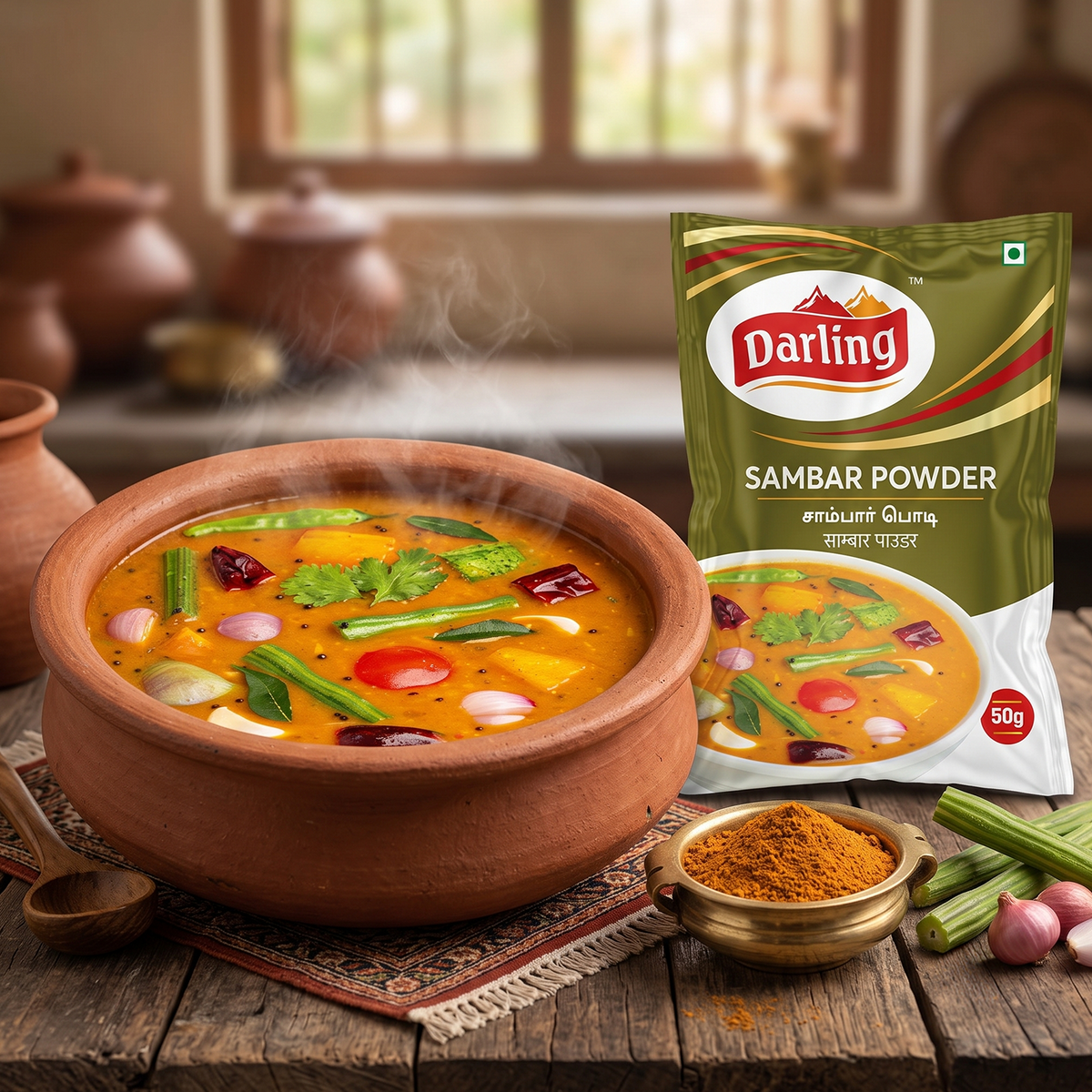
Darling MasalaDarling Masala's sambar powder and compound asafoetida are formulated specifically around how South Indian households actually cook sambar day to day, which is why this guide focuses as much on technique as on ingredients.
- A flat-tasting sambar is usually a timing problem, not an ingredient problem.
- Hing must go into hot oil, never sprinkled in directly.
- Tamarind needs proper soaking and extraction to release full flavour.
- A second tempering right before serving noticeably lifts the final taste.
Introduction
The ingredient list looks right. Toor dal, drumstick, tamarind, and a good sambar powder, all measured out carefully exactly as the recipe says. And yet, the sambar tastes strangely flat, like something is missing without any obvious clue as to what went wrong along the way. More often than not, the problem isn't the ingredients themselves; it's the order and timing in which they go into the pot, a detail that rarely gets mentioned in most recipes. Three specific elements, hing, tamarind, and masala, need to be handled in a very particular way for sambar to develop its full, layered flavour. This guide walks through exactly where most home cooks go wrong, and how to fix it.
Why Does Your Sambar Taste Flat?
Mistake 1: Adding Hing at the Wrong Time
Hing needs heat to release its flavour properly. It should go into hot oil or ghee during tempering, along with mustard seeds and curry leaves, so its aroma is released before it hits the sambar.
Mistake 2: Weak or Poorly Extracted Tamarind
Tamarind needs to be soaked in warm water for at least 15 to 20 minutes, then thoroughly mashed and strained so the pulp fully dissolves.
Did You Know?
Tamarind was historically traded along ancient spice routes and was valued not just for its tang, but for its ability to preserve food naturally, long before refrigeration existed.
Mistake 3: Adding Masala Too Early or Too Late
The right window is after the vegetables have softened in the tamarind water, but before the dal is mixed in, allowing the masala a few minutes of gentle simmering.
Mistake 4: Skipping the Second Tempering
A second tempering poured over the sambar right at the end, just before serving, gives it a fresh burst of aroma that the first tempering alone can't replicate.
Mistake 5: Not Letting It Simmer Long Enough
A slow, gentle simmer, even just an extra 10 minutes, allows the tamarind, masala, and lentils to properly combine.
A Blend Designed to Reward Good Technique
A sambar powder can only do so much if the ingredient itself isn't ground with the right precision to begin with. Darling Masala's sambar powder is made from handpicked spices, cleaned and gently roasted to release their natural oils before grinding, so the flavour is already fully developed before it goes into the pot. Paired with our Compound Asafoetida, sealed to preserve its potency, the two are formulated to work together once the technique, timing, and tempering are right. We source consistently from trusted growing regions to keep that quality steady from batch to batch. Good sambar depends on both a properly made masala and the right method, and we've built our side of that equation carefully.
Conclusion
A flat sambar is rarely a sign that something needs to be added to the recipe. More often, it's a sign that something already in the recipe needs better timing. Fix the hing, fix the tamarind, fix the masala's timing, and the same ingredients you were already using start delivering the flavour they were always capable of.
FAQs
1. Why does my sambar taste flat even though I used a good sambar powder?
The issue is usually in timing, adding hing too late, tamarind too weak, or masala added at the wrong stage of cooking.
2. How long should tamarind be soaked before extracting its juice?
At least 15 to 20 minutes in warm water, followed by thorough mashing and straining for the strongest extract.
3. When should sambar powder be added during cooking?
After the vegetables have softened in the tamarind water, but before mixing in the mashed dal.
4. Does a second tempering really make a difference?
Yes, a fresh tempering poured over the sambar right before serving adds a noticeable burst of aroma.
5. Why is hing important in sambar specifically?
It helps tie together the tanginess of tamarind and the earthiness of the lentils into one cohesive flavour.
6. How long should sambar simmer for the best flavour?
A slow simmer of at least 20 to 30 minutes after adding the masala allows the flavours to fully combine.
7. Can sambar taste be fixed after it's already cooked?
Yes, to some extent. A fresh tempering with hing, mustard seeds, and curry leaves poured over the finished sambar can noticeably improve a flat-tasting batch.
8. Does the type of dal used affect how the sambar turns out?
Yes, toor dal is the standard choice for its texture and flavour, while other dals can make the sambar taste noticeably different in consistency and depth.
9. Should vegetables be cooked separately or directly in the tamarind water?
Cooking vegetables directly in the tamarind water helps them absorb the tang and masala flavour more fully than cooking them separately and adding later.
10. How can I fix a sambar that's turned out too sour?
A small pinch of jaggery or a little extra sambar powder can help balance out excess sourness from over-concentrated tamarind.
